
Support Surface Selection Guide for Clinicians
A clinical guide to selecting the most appropriate Evergreen therapeutic surface based on client needs, care goals, and pressure-injury risk — for OTs, PTs, wound care specialists, nurses, and care planners.
Last updated September 14, 2026
Support Surface Selection Guide for Clinicians
Purpose of this Guide
This clinical guide supports healthcare professionals in selecting the most appropriate therapeutic surface based on individual client needs, care goals, and clinical risk. It is designed for use by occupational therapists, physiotherapists, wound care specialists, nurses, and care planners working in long-term care, community, hospital, and home environments. Whether for direct care or to support clinical justification and documentation, this resource aims to simplify surface selection and support evidence-informed practice.
Understanding Support Surfaces
Support surfaces are a crucial component of a comprehensive 24-hour postural and pressure management care plan. Therapeutic surfaces assist in the prevention and management of pressure injuries through technologies designed to promote pressure redistribution, reduce friction and shear, and manage the microclimate (temperature and humidity) that impact the skin.
Who Can Benefit from a Support Surface?
Support surfaces are particularly beneficial for the following client groups:
- 1
Clients at risk for skin injury
those individuals with a history of pressure injuries or existing wounds, and individuals with fragile skin and/or prominent bony structures such as the sacrum, coccyx, greater trochanters and heels.
- 2
Clients with limited mobility
clients with limited mobility have increased risk of constant pressure without the opportunity to change position and allow blood flow and oxygenation to compromised tissues.
- 3
Clients with physical deformities
individuals who are prone to uneven pressure distribution creating skin risk as a result of anatomical deformities, contractures or amputations where there is potential for increased pressure over bony prominences and areas of limited circulation.
- 4
Clients prone to friction and shear
individuals who are frequently moved/repositioned or those with hyper mobility or agitation are at high risk for skin breakdown due to constant friction against the external surface. This constant movement also increases the risk of internal shear as the skin stretches over bony structures. Materials with low shear properties are essential for frail or elderly clients with delicate skin that can be easily torn.
- 5
Clients requiring comfort and pain management
individuals experiencing chronic pain due to neurological or orthopedic conditions or those with wounds (such as arthritis, CVA and CP) will experience better quality of restorative sleep on a surface that provides immersion and envelopment of bony prominences and reduced pressure on sensitive areas.
- 6
Clients with increased sweating or incontinence
individuals at risk of skin maceration due to moisture from sweating, incontinence, or wound drainage benefit from surfaces with continuous air flow and moisture-wicking materials to maintain a microclimate to promote maintenance of skin integrity or wound healing.
- 7
Bariatric clients
specialized bariatric support surfaces are designed to support and accommodate higher weight capacities and provide adequate pressure redistribution of the increased load. Since temperature management and mobility are often compromised by limited mobility, redundant tissue, restricted air flow and assisted repositioning, low air loss, pressure redistribution and turn assist technologies are important considerations in product selection.
Types of Therapeutic Support Surfaces
Reactive Surfaces
Surfaces that adjust in reaction to an applied load (movement of the body). Reactive surfaces are generally recommended for clients who require pressure redistribution, positioning, and comfort without the use of powered therapies. These clients often have some level of independent bed mobility and a lower risk of skin integrity issues. Types of reactive surfaces:
- High-Density Foam: enhanced durability and pressure redistribution for low to medium risk clients.
- Gel-Infused Foam: memory foam that allows optimal immersion for enhanced pressure redistribution while the cooling benefits of gel promote temperature and moisture management for low to high-risk clients.
- Configurable surfaces: customizable surfaces to meet specific client needs for pressure and temperature management, envelopment of bony prominences and promotion of functional mobility. These surfaces offer a variety of inserts (foam, gel, static air) that can be arranged for specific anatomical areas.
Active Surfaces
Powered surfaces that can adjust load distribution properties independently, with or without an applied load. Using multiple technologies, these surfaces are suitable for higher risk individuals including those with existing pressure injuries (Stage I–IV), requiring enhanced pressure redistribution and temperature management. They can include the following therapies:
- Low Air Loss Therapy: a continuous flow of air assists in managing the heat and humidity of the skin — the microclimate — consistent with the NPIAP definition.
- Alternating Pressure Therapy: 1-in-3 air cells sequentially inflate and deflate to offload and continuously redistribute pressure over the body surface.
- Lateral Rotation Therapy: by laterally rotating the user through controlled right, left, or full-turn cycles, this additional pressure redistribution allows for offloading and reduction of peak pressures on high-risk areas. Continuous repositioning combined with alternating pressure enhances circulation and promotes pain management. Lateral rotation can also act as a turn-assist feature for caregivers reducing risk of injury in repositioning clients, preparing for transfers and providing care.
Selecting the Right Support Surface for Your Client
Each client has individual needs thus product selection must be based on the goals determined during a physical and functional assessment. Key factors in surface selection are:
- 1
Level of bed mobility
consider the individual's ability to move and change position independently. Also consider alternate positions the client may need for functional activities.
- 2
Size and weight
ensure the surface can not only support the client's weight but that the therapeutic area of the surface can adequately support their body and allow for repositioning.
- 3
Microclimate control
for clients prone to sweating or incontinence, select surfaces that manage moisture and temperature to prevent skin breakdown.
- 4
Maintenance of microclimate
consider surface and cover materials that reduce heat and humidity buildup. Where an individual experiences challenges related to temperature regulation, sweating and incontinence consider low air loss to reduce skin maceration.
- 5
Friction and shear reduction
consider surface materials and covers that reduce friction as clients move or are repositioned. Allowance for immersion and envelopment is important in reducing peak pressure but can also impact shear — stretching of the skin over bony prominences leading to potential skin tears.
- 6
Risk of pressure injury
assessment, including use of a validated risk assessment tool, is essential to identify potential for pressure injury development. Prioritize surfaces that offer enhanced protection for high-risk clients.
- 7
Pre-existing pressure injuries
consider the severity (stage) and location of skin injuries to determine strategies to off-load or redistribute pressure. The number of existing pressure injuries and those recently closed is essential to consider positioning and selection of surface therapies.
Evergreen Surface Options Based on Pressure Injury Stage
Stages of pressure injuries:
- Stage I: non-blanchable erythema of intact skin.
- Stage II: partial-thickness skin loss with exposed dermis.
- Stage III: full-thickness skin loss.
- Stage IV: full-thickness skin and tissue loss.
Evergreen surface options based on risk / stage of pressure injuries:
- EverFoam — low to medium risk.
- EverGel — low to high risk.
- Evolve (with ROHO® inserts) — low risk through Stage I.
- Palm — high risk through Stage III.
- OpalAir — Stage I through Stage IV.
- OpalAir Turn — Stage I through Stage IV.
Evergreen Surface Options Based on Risk / Stage of Pressure Injuries
- OpalAir Turn: Stage 1 – Stage 4
- OpalAir: Stage 1 – Stage 4
- Palm: High Risk – Stage 3
- Evolve w/ ROHO®: Low Risk – Stage 1
- EverGel: Low Risk – High Risk
- EverFoam: Low Risk – Medium Risk
Clinical Standards Across All Evergreen Surfaces
Evergreen offers a range of therapeutic surfaces designed to minimize agitation, elevate skin protection, and encourage an environment for optimal positioning and restorative sleep. Developed in collaboration with leading clinicians, engineers, and foam designers, all Evergreen surfaces are built to meet the needs of long-term care, hospital, and community care environments. Our surfaces are thoughtfully designed to simplify set-up, support clinical protocols, and promote resident comfort.
Key features shared across all Evergreen foam and powered surfaces:
- Technologies to enhance pressure redistribution and skin protection
- Designed to promote comfort and minimize agitation, supporting better sleep and healing
- Easy-to-clean, wipeable, fluid-resistant covers suitable for infection control and cleaning protocols; removable covers can also be machine-washed if needed for added flexibility
- Standard sizing to fit most hospital and long-term care beds
- Suitable for use in all care environments: facilities, hospitals, LTC, rental programs, and home care
- Durable, low maintenance, high quality products that meet Canadian standards
- Bariatric options available in both foam and powered surfaces, supporting higher weight capacities and managing temperature/humidity needs
- Engineered for ease of use, transport, and storage across all care settings
Evergreen Foam Surfaces
Evergreen offers four foam surfaces:
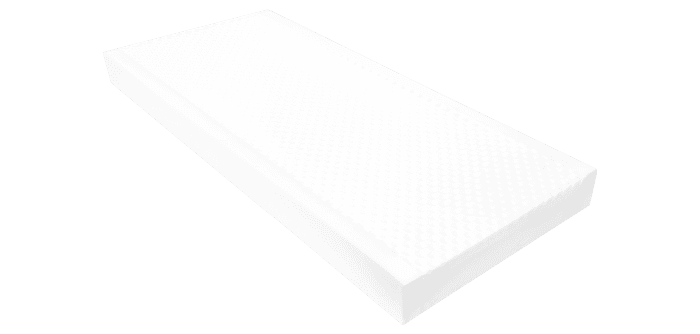
EverFoam
versatile and designed for all care environments
2-layer design. Top comfort layer: 2" top comfort layer made of high-density polyurethane foam with a sculpted surface to promote immersion for optimal pressure distribution. The contoured cuts enhance airflow across the surface, helping to dissipate heat and manage moisture buildup. Bottom layer: firm base made of high-density foam to provide structure and support and optimize characteristics of the top-layer, with 2.75" high-density lateral borders for stability and safety.
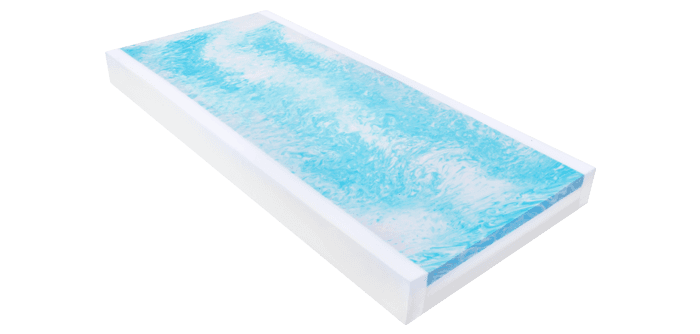
EverGel
gel-infused memory foam designed for all care environments
3-layer design. Top comfort layer: breathable EverGel™ gel-infused memory foam for optimal immersion and pressure distribution, promoting air flow and heat dissipation. Mid-layer: high-resiliency transitional layer to maximise the top-layer characteristics. Bottom layer: firm base providing structure and support, with 2.75" high-density foam lateral borders for stability and safety.
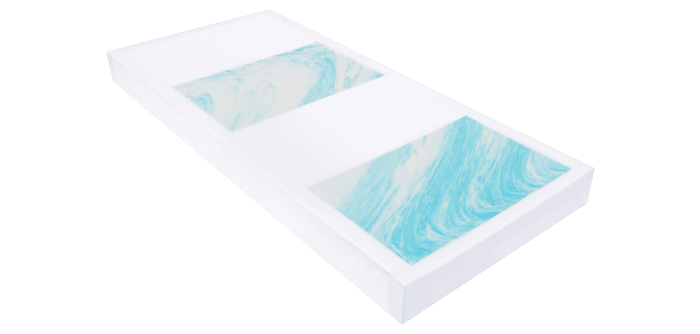
Evolve
customizable for individualised support and protection
2-layer design. Top comfort layer: configurable top-layer based on client needs for pressure redistribution, firmness, temperature/humidity control, and mobility. Explore different possibilities with EverFoam, EverGel, and ROHO® inserts — there are 81 unique configurations for personalized comfort and care. Bottom layer: firm base made of high-density foam to provide structure and support and optimize characteristics of the top-layer inserts, with 2.75" high-density foam lateral borders for stability and safety.
- EverFoam insert: find a balance of comfort and durability with our high-density polyurethane foam.
- EverGel insert: experience enhanced immersion and pressure redistribution with our breathable EverGel™ gel-infused memory foam. Promotes air flow and heat dissipation to enhance comfort.
- Alternative inserts: compatible with alternative inserts, including ROHO® inserts.
Ideal for clients requiring ongoing adjustability, especially those with progressive conditions, or for facilities seeking customization for different client needs.
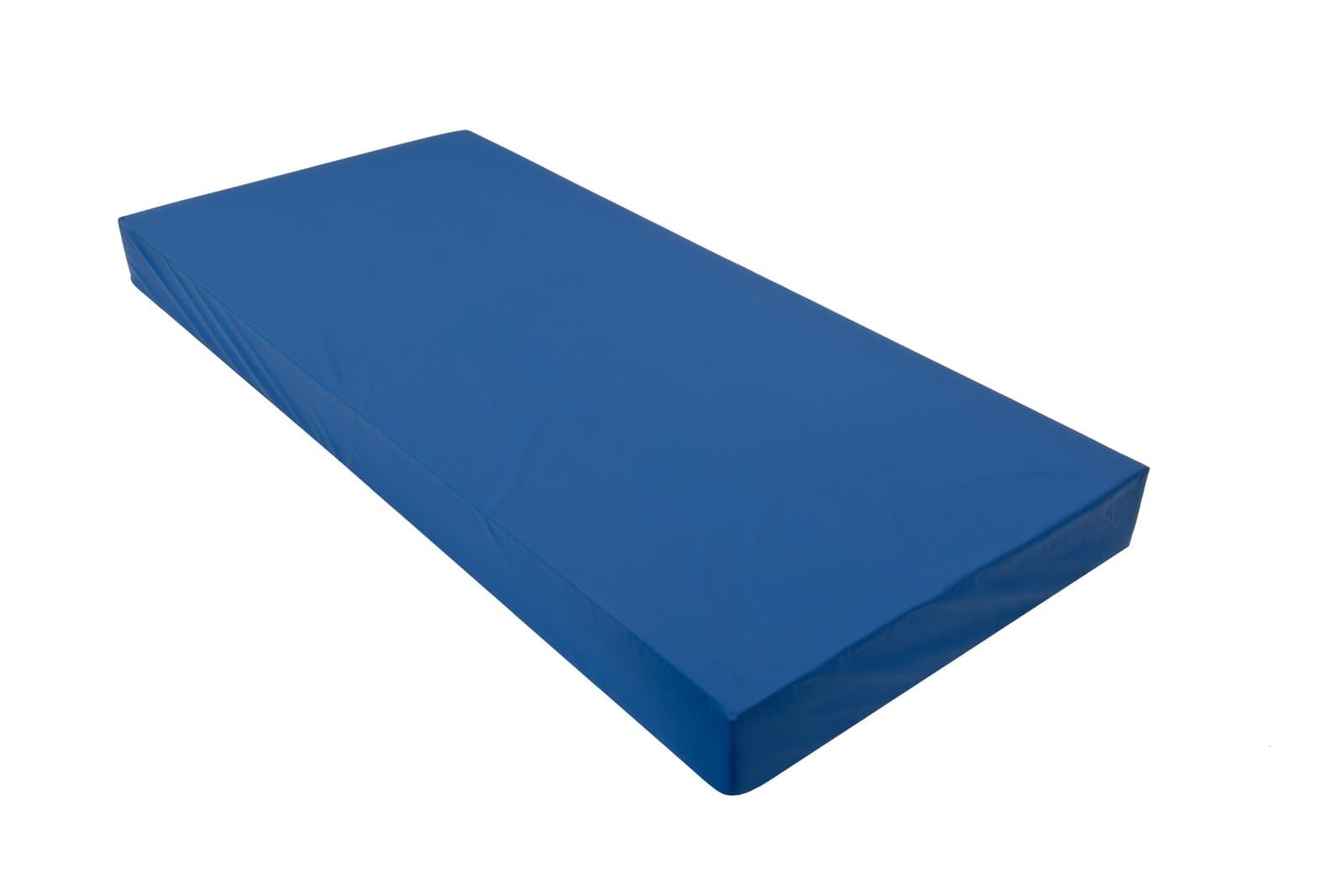
EverCare
comfort and support for bariatric clients
Our bariatric surfaces are engineered to support clients up to 600 lbs, without compromising comfort or clinical effectiveness. It features a 7" high, high-density, high resilience foam that delivers durable support and effective pressure redistribution over time.
Key features shared across all Evergreen foam surfaces
- Compatible with most hospital beds
- CertiPUR-US® certified foam, made without ozone depleters or other harmful chemicals
- Durable covers to withstand facility use and cleaning
- No setup required — ready to use on delivery and suitable for all care environments
- Made in Canada and backed by a 1-year warranty
Foam Surface Comparison
| Feature | EverFoam | EverGel | EvolveEverFoam Inserts | EvolveEverGel Inserts or ROHO sections | EverCare |
|---|---|---|---|---|---|
| Risk of Pressure Injuries | Low-Med Risk | Low-High Risk | Low-Med Risk | Low-High Risk | Low-High Risk |
| Weight Cap | 350 lbs | 400 lbs | 350 lbs | 400 lbs | 400 lbs (36"), 600 lbs (42") |
| Surface Heightoptimized to fit most standard hospital beds | 6" | 6" | 6" | 6" | 7" |
| Size Options | 36" in-stock | 36" or 42" in-stock | 36" in-stock | 36" in-stock | 36" or 42" in-stock |
| Pressure Distribution | 4/5 | 4/5 | 4/5 | 4/5 | 3/5 |
| Firmness | 4/5 | 3/5 | 4/5 | 3/5 | 4/5 |
| Temperature | 3/5 | 4/5 | 3/5 | 4/5 | 2/5 |
| Mobility | 4/5 | 3/5 | 4/5 | 3/5 | 3/5 |
| Transferslateral borders for stability | 4/5 | 4/5 | 4/5 | 4/5 | 4/5 |
| Suitable for all care environmentshospitals, LTC, rental programs, homecare | Yes | Yes | Yes | Yes | Yes |
| RW86 Coverencourages optimal immersion, wipeable, machine washable | Yes | Yes | Yes | Yes | Yes |
| High-quality, sustainable foamCertiPUR-US® and BioFLX™ foam | Yes | Yes | Yes | Yes | Yes |
| In-stock | Yes | Yes | Yes | Yes | Yes |
Evergreen Powered Surfaces
Evergreen offers three powered surfaces:
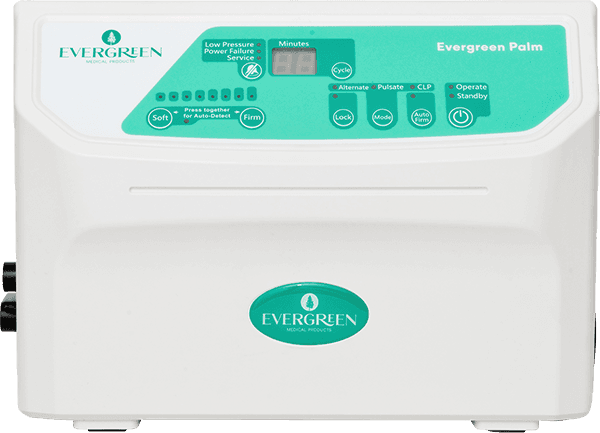
Palm
our entry-level powered surface
- Delivers alternating pressure with micro low air loss for continuous pressure redistribution and microclimate management.
- Ideal for moderate to high-risk clients who require consistent, gentle pressure redistribution.
- The Auto-Detect feature ensures safe and accurate initial setup by automatically sensing client weight and adjusting pressure levels — helping ensure clients are supported correctly from day one.
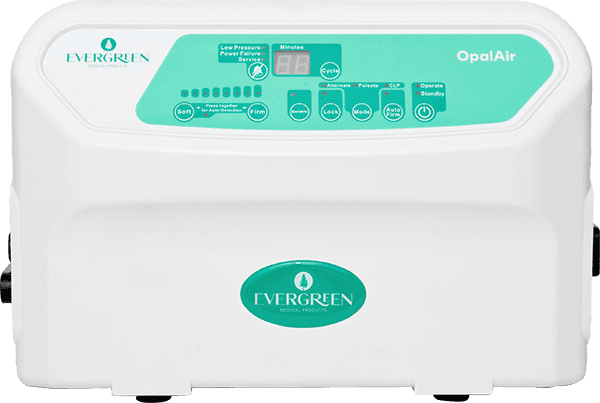
OpalAir
our full-featured therapeutic surface
- Combines true low air loss with alternating pressure, providing advanced moisture management and pressure redistribution.
- Ideal for high-risk clients needing enhanced skin protection and comfort.
- Features 'Auto-Fowler' which automatically adjusts air flow to the sacral/pelvic area when the bedhead is raised — no button press required — helping prevent bottoming-out and ensuring enhanced protection for high-risk bony areas.
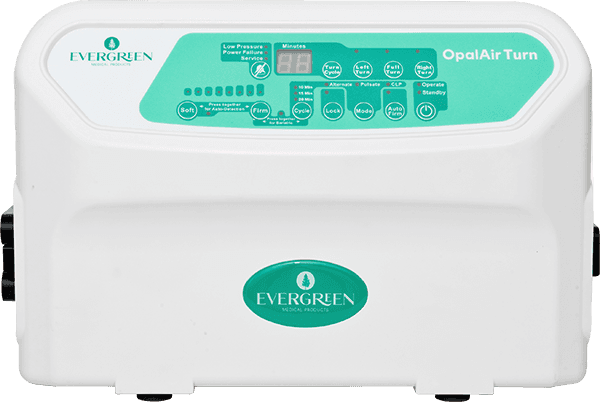
OpalAir Turn
lateral rotation therapy with alternating pressure
- Combines lateral rotation with alternating pressure and low air loss therapies. This dynamic combination not only enhances pressure distribution but also facilitates caregiving activities.
- Features higher air flow rate which makes it ideal for clients with moisture issues, offering assistance in moisture reduction, pressure redistribution, and optimal positioning.
- Designed to effortlessly and gently reposition individuals, ensuring both effective care and enhanced comfort throughout the night, which makes it ideal for clients requiring repositioning overnight.
Features shared across all Evergreen powered surfaces
Alternating Pressure Therapy. The 1-in-3 air cells gently inflate and deflate, cyclically shifting which areas of the body bear load to redistribute pressure across the contact surface. The 'SmoothCell' technology facilitates gentle cell movement, ensuring that clients remain stable and unaffected by the surface's movements, thereby minimizing agitation and promoting restorative sleep.


Low Air Loss. Evergreen surfaces provide continuous low air loss through a base-layer air manifold, rather than direct airflow from the air cells. This gentler approach reduces moisture and maintains a stable microclimate without blowing air directly onto the skin — helping to protect against drying and support skin integrity. This design is especially beneficial for clients prone to sweating or incontinence, as it promotes moisture management while maintaining skin comfort.


Auto-Detect Technology. The 'Auto-Detect' feature automatically calibrates the optimal pressure based on the client's body weight and surface area. This technology improves the efficiency of set-up, reducing the need for ongoing caregiver adjustments and ensuring that clients receive immediate and continuous protection from pressure injuries.


Powered Surface Comparison
| Feature | Palm | OpalAir | OpalAir Turn |
|---|---|---|---|
| Stage | Stage 1-3 | Stage 1-4 | Stage 1-4 |
| Low Air Loss | Micro | True | True |
| Weight Cap | 400lbs (36"), 560lbs (42") | 600lbs (36"), 1000lbs (42") | 600lbs (36"), 1000lbs (42") |
| Surface Heightoptimized to fit most standard hospital beds | 8" | 8" | 8" |
| Size Options | 36" or 42" in-stock | 36" or 42" in-stock; special order 48" | 36" or 42" in-stock; special order 48" |
| Therapy Modes | Alternate, Pulsate, CLP | Alternate, Pulsate, CLP | Alternate, Pulsate, CLP |
| Auto-Detect | Yes | Yes | Yes |
| StaticPillow | Yes | Yes | Yes |
| EasyCover | Yes | Yes | Yes |
| SmoothCell | Yes | Yes | Yes |
| Power Outage Coverage | Yes | Yes | Yes |
| Auto-Fowler | No | Yes | Yes |
| HeelOffload | No | Yes | Yes |
| Cable Management | No | Yes | Yes |
| Lateral Rotation | No | No | Yes |
| In-Stock | 36" or 42" in-stock | 36" or 42" in-stock | 36" or 42" in-stock |
Glossary of Terms
Based on definitions from the National Pressure Injury Advisory Panel (NPIAP) and recognized clinical practice guidelines.
- Pressure Injury
- Localized damage to the skin and/or underlying soft tissue, typically over a bony prominence or under a medical device. It may appear as intact skin or an open ulcer and is primarily caused by prolonged pressure or pressure combined with shear.
- Support Surface
- A mattress, mattress replacement, overlay, or integrated bed system designed to manage pressure redistribution, tissue load, and/or the microclimate at the skin–surface interface, used in the prevention or treatment of pressure injuries.
- Reactive Support Surface
- A powered or non-powered surface that responds to the body's weight only when pressure is applied. It provides pressure redistribution through foam, gel, static air, or similar materials without active changes in load distribution.
- Active Support Surface
- A powered surface that actively changes load distribution, with or without client movement. These surfaces typically use alternating pressure, low air loss, or lateral rotation technologies and are suitable for higher-risk clients.
- Low Air Loss (LAL)
- A feature of a powered surface that provides continuous airflow through the mattress to reduce moisture and heat, helping maintain a dry and cool environment at the skin–surface interface (microclimate).
- Alternating Pressure (AP)
- A powered feature in which air cells cyclically inflate and deflate, redistributing pressure by changing which areas of the body bear load — characterized by cycle frequency, duration and amplitude — consistent with the NPIAP definition.
- Lateral Rotation
- A surface function that gently rotates the client from side to side along the longitudinal axis of the body. It is used to aid in pressure redistribution, respiratory function, and caregiver-assisted repositioning.
- Microclimate
- The localized temperature and humidity at the skin–surface interface. Proper microclimate management helps reduce the risk of maceration and skin breakdown.
- Immersion
- The depth to which a person sinks into a support surface. Increased immersion can help distribute pressure over a larger surface area.
- Envelopment
- The ability of a support surface to conform closely to the contours of the body, enhancing pressure redistribution and reducing peak pressure points over bony prominences.
- Friction
- The resistance encountered when the skin moves across a surface. Excessive friction can cause superficial skin damage.
- Shear
- A mechanical force that occurs when the skin stays in place while the underlying tissues are pulled in a different direction — often due to sliding in bed. Shear can damage deeper tissues even when the skin remains intact.
Attribution: definitions sourced from the NPIAP Support Surface Standards Initiative (S3I) Glossary and 2016 Pressure Injury Staging Guidelines.
Sources and Additional Information
This guide was developed by clinicians with reference to national and international best practices, clinical guidelines, and resources used by healthcare professionals across Canada. These sources support evidence-informed decisions in the prevention and management of pressure injuries and the selection of appropriate therapeutic surfaces. If you would like additional clinical support when selecting the most appropriate surface for your client or facility, Evergreen's Clinical Team is available to assist. Contact us at contact@evergreenmedicalproducts.com.
Canadian clinical guidelines & resources
- Wounds Canada — Foundations of Best Practice for Skin and Wound Management Series (woundscanada.ca). National authority on wound prevention and surface selection, widely used across Canadian care settings.
- Saskatchewan Health Authority — Choosing Support Surfaces in Long-Term Care: Practice Resource (2022). A practical decision-making framework for support surface selection in provincial LTC settings.
- Ontario Neurotrauma Foundation & Rick Hansen Institute — Canadian Best Practice Guidelines for Pressure Ulcers in Spinal Cord Injury. Evidence-based guidance for clinicians working with clients in complex or high-risk care environments.
- Fraser Health, Interior Health, Island Health (BC) — regional tools include the HAPI Prevention Checklist and MEPP Prescriber Protocols, widely used in long-term care and rehabilitation facilities throughout British Columbia.
- Registered Nurses' Association of Ontario (RNAO) — Best Practice Guideline: Pressure Injuries – Assessment and Management (3rd ed.) (rnao.ca/bpg). A cornerstone reference in interprofessional clinical practice across acute, community, and LTC sectors.
International guidelines & clinical databases
- National Pressure Injury Advisory Panel (NPIAP) — npiap.com. The North American standard for pressure injury staging, terminology, and support surface definitions.
- European Pressure Ulcer Advisory Panel (EPUAP) — Prevention and Treatment of Pressure Ulcers/Injuries: Clinical Practice Guideline (epuap.org). Frequently used in Canadian academic and clinical education programs.
- Cochrane Library — cochranelibrary.com. Repository of high-quality systematic reviews on pressure injury interventions and support surfaces.
- PubMed — pubmed.ncbi.nlm.nih.gov. Useful for searching peer-reviewed studies on topics such as "alternating pressure surfaces," "foam mattresses," "microclimate management," and "immersion and envelopment."